1960s - 1970s winter olympics
Squaw Valley 1960
The Winter Games return overseas, to The Sierra Nevada in California. This is the only edition without bobsleigh, as the track had not yet been built; however, men’s biathlon and women’s speed skating make their debut. Frenchman Jean Vuarnet wins the downhill, using metal skis instead of wooden ones for the first time.
Nation: United States of America
Athletes: 665 (144 women, 521 men)
Nations: 30
Medal table: USSR, United States of America, Norway
Innsbruck 1964
Threatened by the lack of snow, the Games are held as scheduled thanks to the mobilization of the Austrian army, which excavate thousands of cubic meters of ice and snow for the luge and bobsleigh runs and the ski slopes, respectively. For the first time at a Winter Games, the flame is lit in Olympia.
Nation: Austria
Athletes: 1,091 (199 women, 892 men)
Nations: 36
Medal table: USSR, Austria, Norway
Grenoble 1968
The Winter Games returns to France almost half a century after the pioneering ones in Chamonix: President Charles de Gaulle officially opened the Games. The first edition to be broadcast on color television, Grenoble 1968 marks the introduction of gender testing for women and random doping controls.
The Olympic gold medal goes to Eugenio Monti, a multiple world champion from Alto Adige, who at the age of forty triumphs in the two-man and four-man bobsleigh. Norway finishes at the top of the medal table, breaking the Soviet national team’s monopoly that had lasted since its debut in Winter Olympic competitions.
Nation: France
Athletes: 1,158 (211 women, 947 men)
Nations: 37
Medal table: Norway, USSR, France
Sapporo 1972
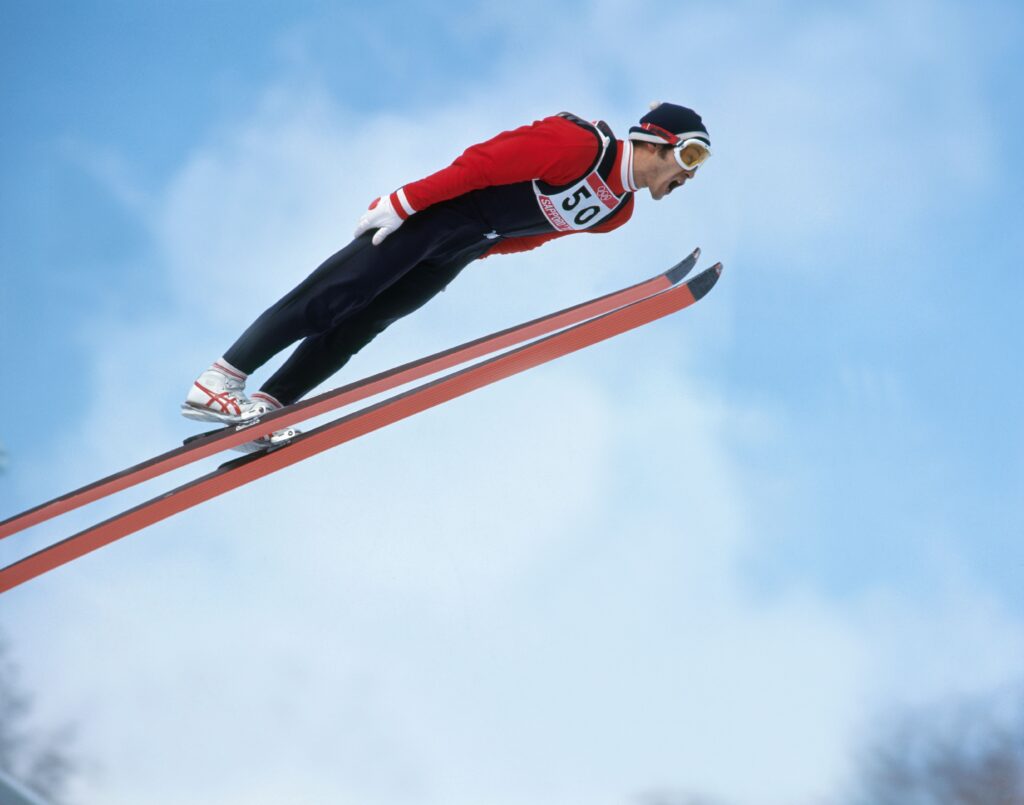
These are the first Winter Olympics held in Asia. The all-Japanese podium in the ski jumping hill is unforgettable: before then, Japan had never won a gold medal. For Italy, it was Gustav Thöni’s Olympics, winning the gold in the giant slalom and silver in the slalom.
Nation: Japan
Athletes: 1,006 (205 women, 801 men)
Nations: 35
Medal table: USSR, East Germany, Switzerland