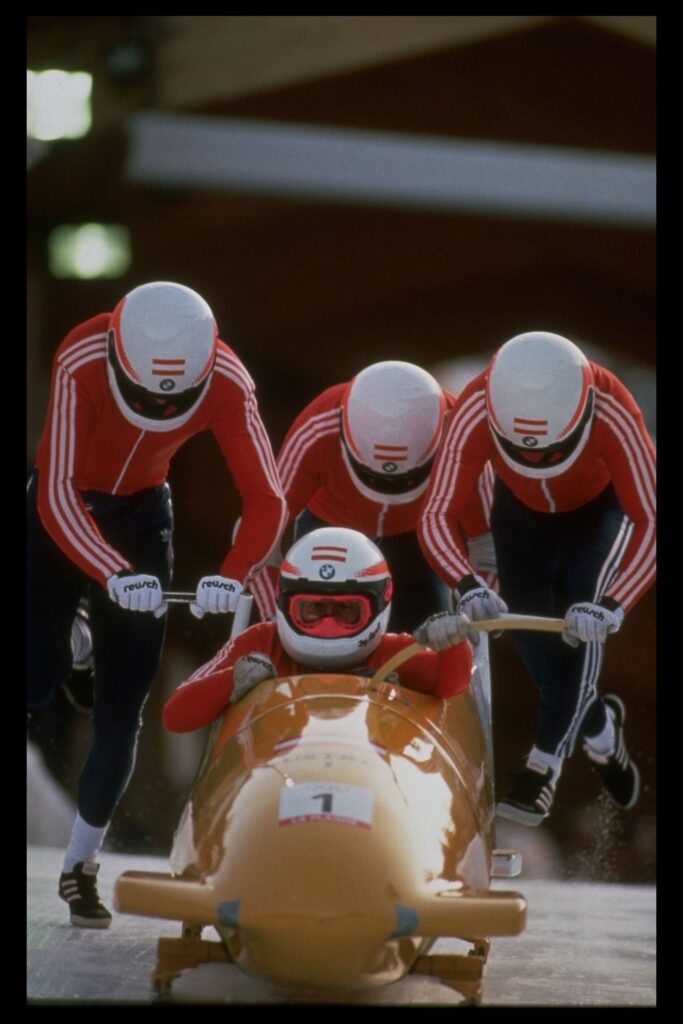
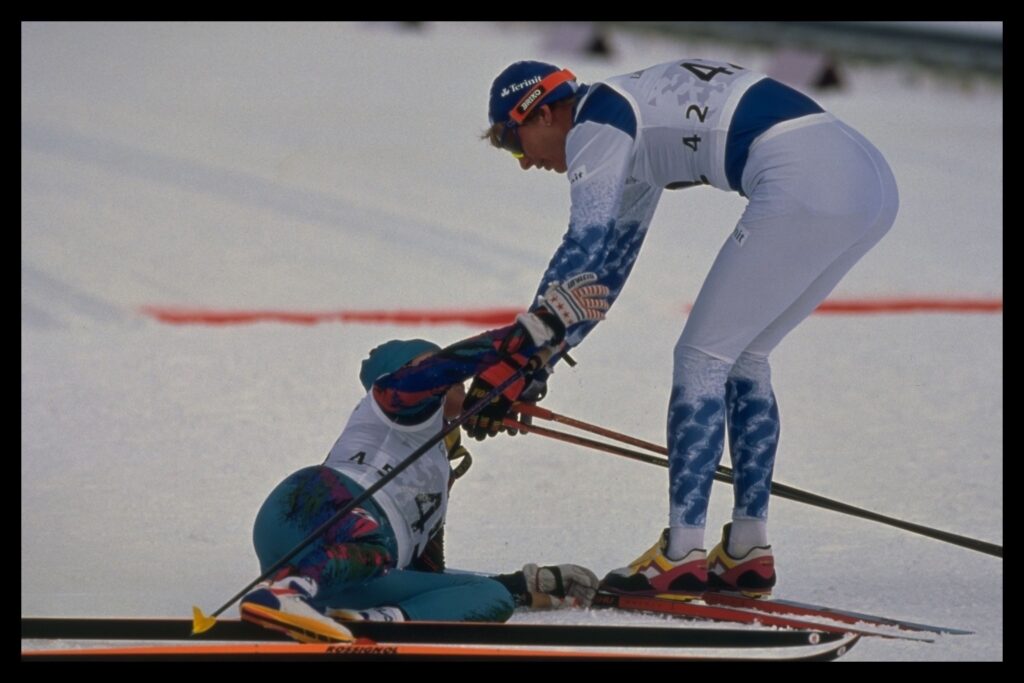
1980s - 1990s winter olympics
Calgary 1988
Canada hosts the Winter Olympic Games for the first time, an edition lasting an unprecedented 16 days. The Alpine skiing events increase from three to five, with the inclusion of the super-G and the combined. Team events are added to the Nordic combined and ski jumping. Curling returns to the program as a demonstration sport, along with short track and freestyle. These are the first Games to ban smoking. Alberto Tomba is the shining star for the Italian delegation, winning the gold medal in the giant slalom and slalom on his Olympic debut.
Country: Canada
Athletes: 1,423 (301 women, 1,122 men)
Nations: 57
Medal count: USSR, East Germany, Switzerland
Innsbruck 1988 Paralympics
377 athletes (300 men, 77 women) from 22 countries participate. Alpine skiing, biathlon, cross-country skiing, and speed skating are included in the Paralympic competition program for the first time. Norway dominates the medal table, finishing ahead of Austria and West Germany.
Albertville 1992
These are the last Winter Olympic Games to be held in the same year as the Summer Olympics and the first to be held after the fall of the Berlin Wall. Germany is unified, the former Soviet Republics compete under the name of the United Team under the five-ringed flag, and the Baltic States participate for the first time.
Nation: France
Athletes: 1,801 (488 women, 1,313 men)
Nations: 64
Medal table: Germany, United Team, Switzerland
Tignes-Albertville 1992 Paralympics
365 athletes (288 men, 77 women) representing 24 countries take part. Due to a lack of participants or suitable venues, no ice skiing competitions are held, only alpine and Nordic skiing events. The United States of America tops the medal table, ahead of a unified Germany and the United Team (former USSR).
Lillehammer 1994
This edition is held just two years after the previous one, as the International Olympic Committee had decided that the Summer and Winter Games should be held in different years. The competition takes place during the war in the former Yugoslavia; however, significantly, one Croatian, two Bosnian, and one Serb athlete make up the Bosnia-Herzegovina team.
Nation: Norway
Athletes: 1,737 (522 women, 1,215 men)
Nations: 67
Medal table: Russia, Norway, Germany
Lillehammer 1994 Paralympics
Norway hosts the Winter Paralympic Games for the second time, with 469 athletes representing 31 countries participating. Para ice hockey enters the competition program for the first time. The hosts dominate the medal table with 64 medals – 29 of them gold – before Germany and the United States.