the evolution of skiing
The Origins
The history of skiing is a long journey of inventions and adaptations: born as a response to a need for survival, the first skis appeared about 8,000 years ago in the northern regions of Asia and Russia. They were simple wooden boards used to walk on snow without sinking. Over time, they lengthened and developed a raised tip, allowing for faster gliding during hunting and travel.
From Necessity to Leisure
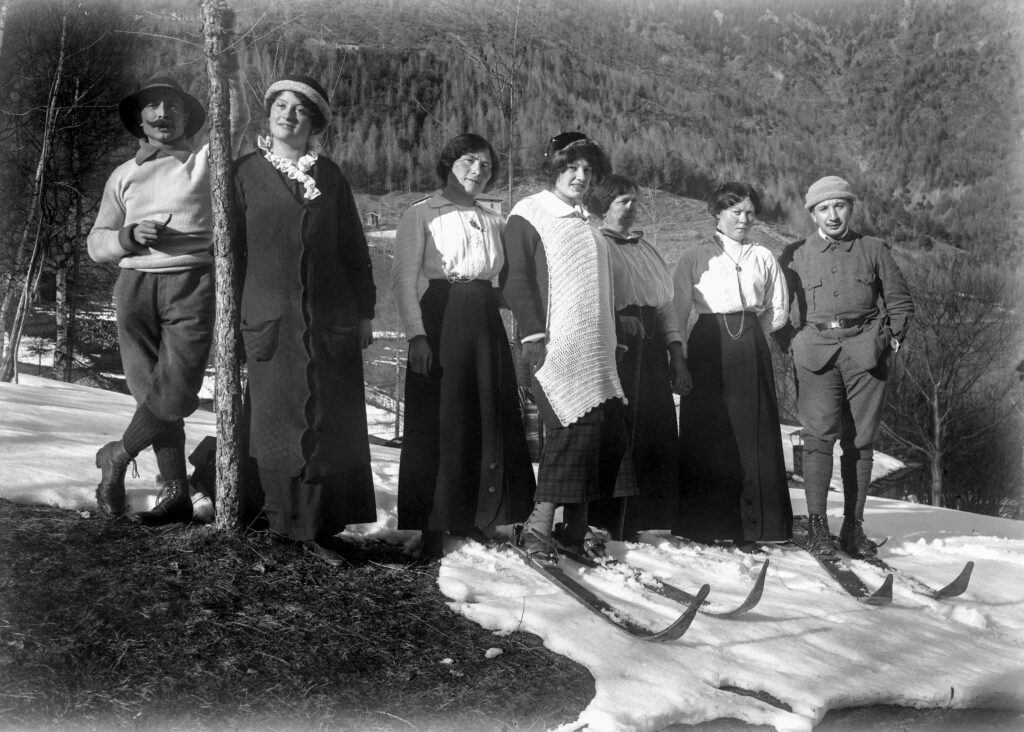
For centuries, skiing remained essentially a means of transportation, but from the mid-19th century onwards, it began to transform into a sports equipment. In Italy, it reached the end of the century: skis were wooden boards with simple leather laces and work boots. The first Italian ski club was founded in 1901 in Turin.
The Early 20th Century
In the early decades of the 20th century, skis were long, straight, and without edges, designed for stability rather than maneuverability; the skiing style is Telemark, with bindings that leave the heel free. This style makes turns easier, thus opening the door to descents and speed. Poles go from one, used as a brake and rudder, to two.
1930s and 1940s
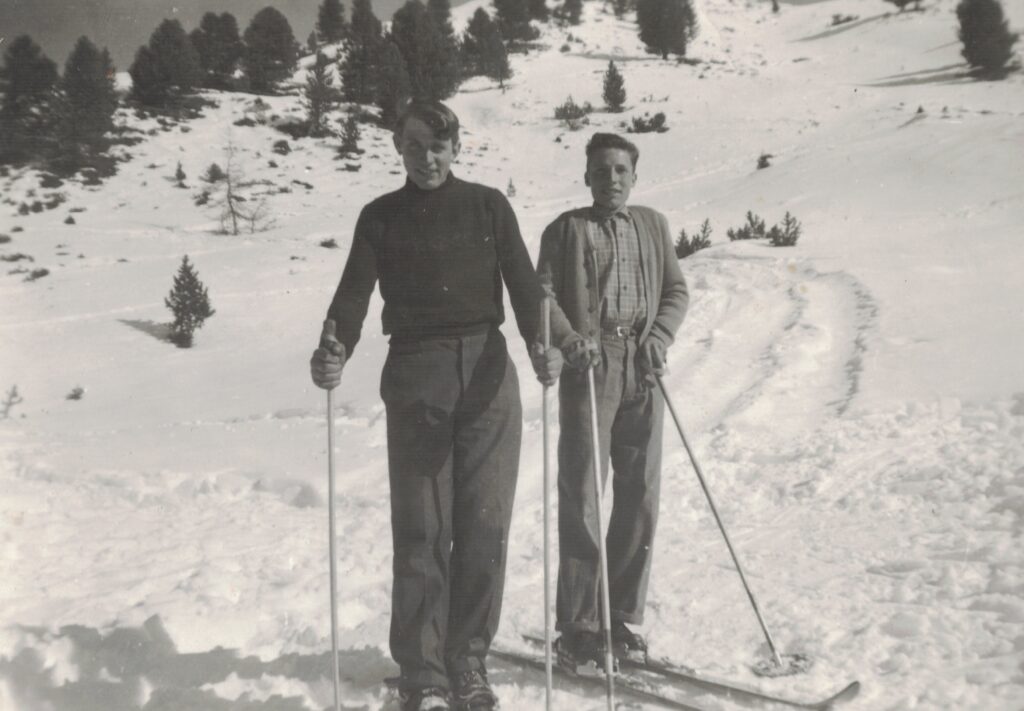
Skis undergo their first real revolution: the appearance of metal edges that improve grip on hard snow and ice, making turns and descents easier. Around 1935, Kandahar bindings arrive, with an adjustable front lever and cables connected to a spring at the heel, which keep the boot firmly on the ski, increasing control and safety: modern alpine skiing is born.
From the postwar period to the economic boom
After World War II, materials evolve: hickory wood, more elastic, replaces ash, and from the 1950s, fiberglass makes skis more durable. In the 1960s, industrial production introduces skis made of plasticised wood, plastic, and metal, with smoother bases and adjustable, opening bindings. In the following years, groomed slopes favored mass diffusion: edges became recessed, and the Italian invention of the ski stopper, which prevented skis from falling in the event of a fall, significantly increased safety.
The 1990s and the Carving Revolution
Another major innovation appeared during these years: the sidecut ski, or carving ski. Narrower in the middle and wider at the tip and tail, it allowed for easier and more precise turns. Skiing techniques changed, and skiing became accessible to an ever-wider audience.
Contemporary Skiing
In the early 2000s, skiing became highly specialised: materials such as carbon, titanium, and graphene made it lighter and faster, while equipment dedicated to disciplines such as freeride and freestyle was developed.