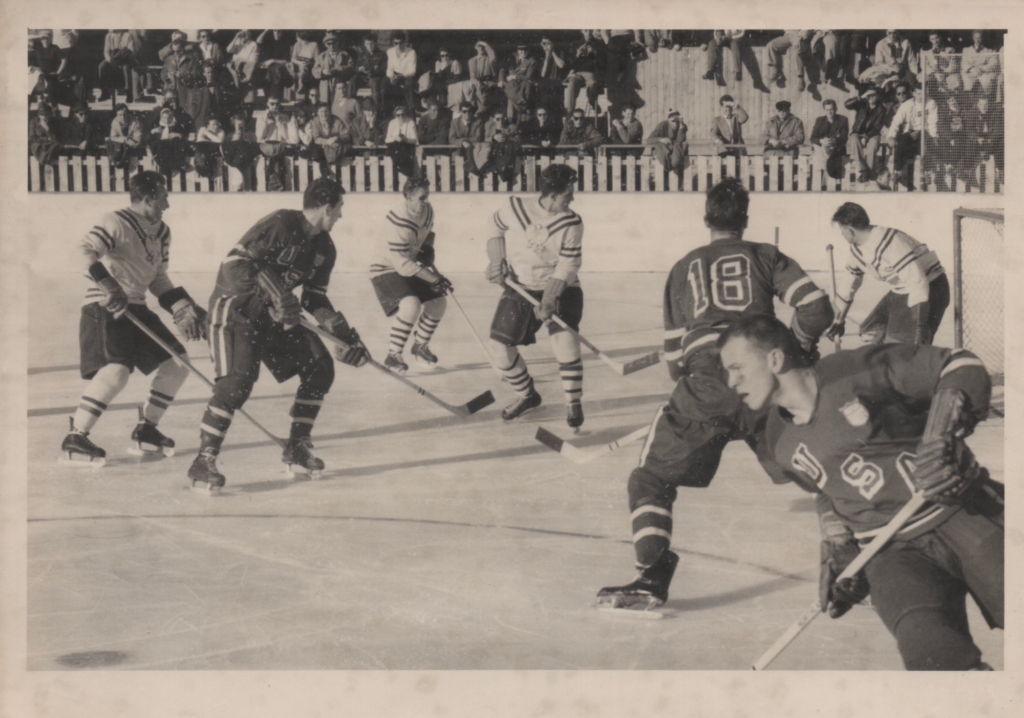
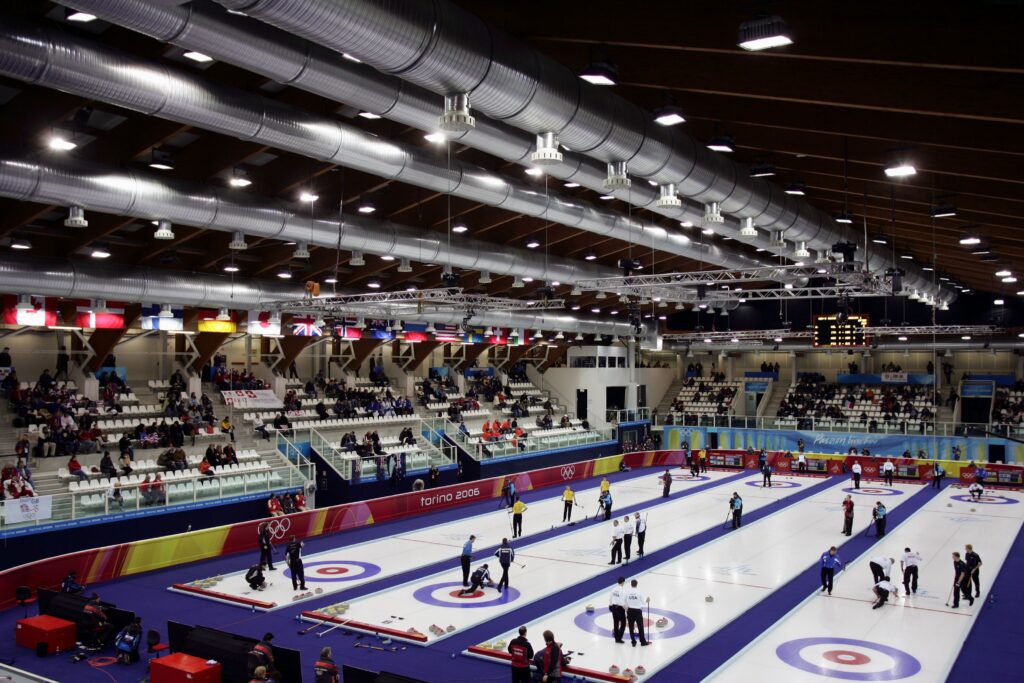
Among the Olympic Winter ice sports, curling and ice hockey express two different yet complementary approaches to competition: tactical precision and maximum speed.
Curling originated in Scotland, where the first official club is founded in 1716. Played on an ice rink, two teams slide granite stones toward a target of concentric circles, controlling their trajectory and speed with brooms, which reduce friction. After its Olympic debut in Chamonix 1924, the sport returned to the program at the 1998 Nagano Games with men’s and women’s tournaments, to which mixed doubles was added at PyeongChang 2018.
Ice hockey originated in Canada in the early decades of the 19th century and owes its name to the French term hocquet, the stick used in the game. In the 19th century, the ball was replaced by the puck, and the first modern rules were established. Played on a rink marked by lines and circles, hockey pits two teams of six players against each other, with constant substitutions. The objective is to get the puck over the opponent’s goal line in a 60-minute game, divided into three periods. Featured at the Olympics since 1920 and the Winter Games since 1924, it is today one of the most popular and spectacular sports.