women's work: food, home, children

From childhood, girls and young women were educated to work hard and to be responsible. Work in the fields was complemented by domestic chores, considered typically feminine: they cared for younger siblings, tended the livestock, prepared meals, spun yarn, sewed, and kept the house neat. Frequent male emigration increased women’s responsibilities, making women the cornerstone of the family economy. Boys and girls grew up observing and learning from adults, in a world where work was the norm and necessity, and each day was governed by the rhythm of domestic and rural activities.

A woman and her grandchildren around the fireplace in a mountain hut in Val Zebrù, Valfurva, 1970–1980. Photographic collection of the Bormio Civic Museum. "We Are the Alps" project, Cultural Archive of Valtellina and Valchiavenna
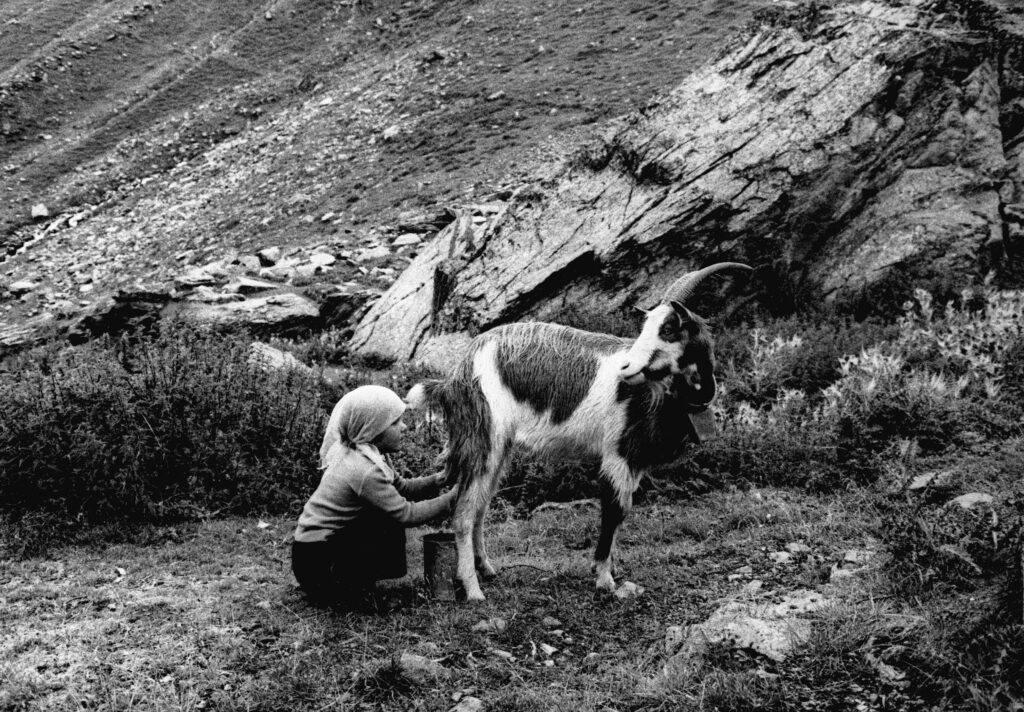
Girl milking a goat at Alpe Gembrè, Lanzada, 1974. Photograph by Franco Capuzzoni, photographic collection of the Chiesa in Valmalenco Municipal Library. "We Are the Alps" Project, Cultural Archive of Valtellina and Valchiavenna
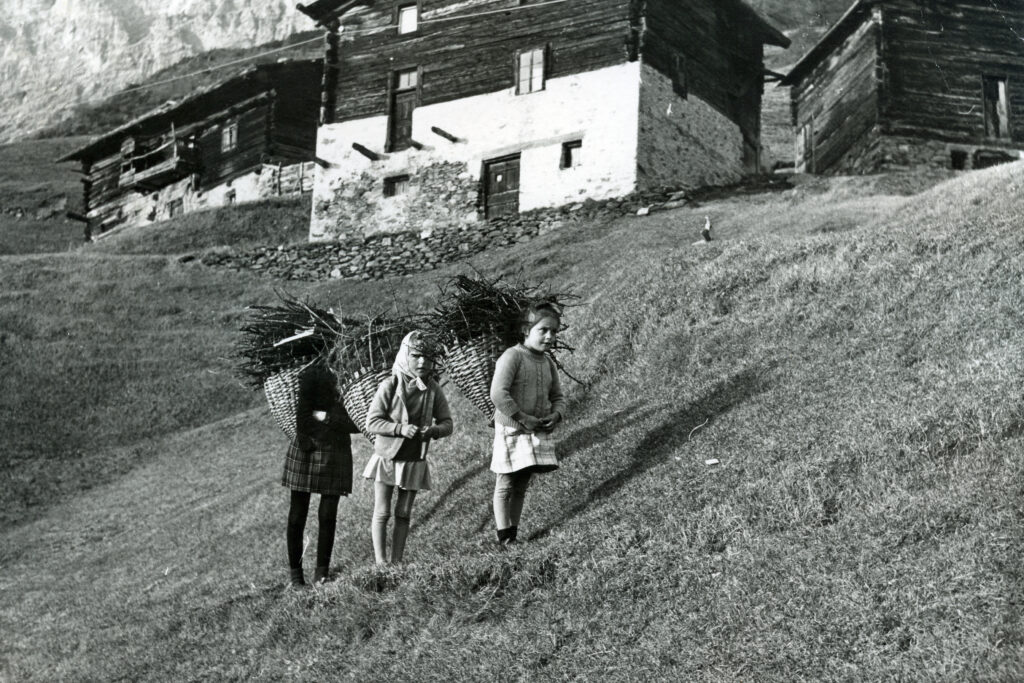
Three girls with baskets on their shoulders, Madonna dei Monti, Valfurva, 1970-1980. Photograph by Mario Testorelli, photographic collection of the "Mario Testorelli" Valfurva Valley Museum. "We Are the Alps" Project, Cultural Archive of Valtellina and Valchiavenna
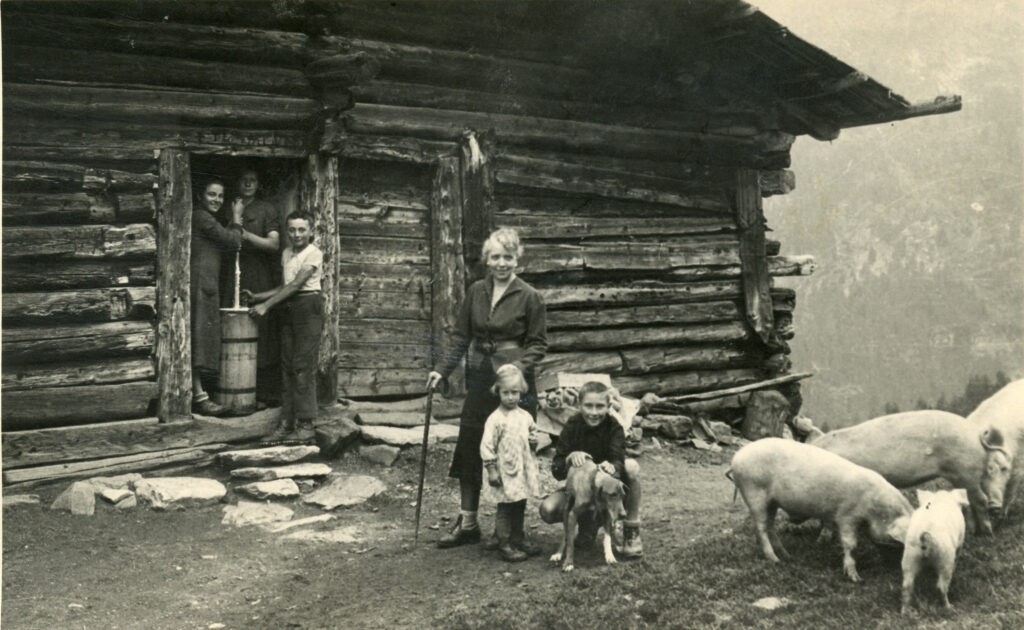
Exterior of a mountain hut in Plagheira, Valfurva, 1930–1940. Photographic collection of the "Mario Testorelli" Valfurva Valley Museum. "We Are the Alps" project, Cultural Archive of Valtellina and Valchiavenna

Objects

  1. Cradle (Cüna) A baby bed raised from the ground by two slightly curved supports that allow it to be rocked. The wooden frame (scérc) had a sheet to protect the newborn.
  2. Walker (Girel) with wheels, for children’s first steps.
  3. High Chair (Cadregùn) A high seat for children, designed so they could sit at table height. A round hole in the seat allowed it to be used as a commode.
  4. Sifter (Val) Made of woven wicker in the shape of a shell with two handles, it was used to separate (sift) chestnuts from their shells and the grain from the chaff.
  5. Chestnut Mortar and Pestle (Sciüca) A container hollowed out from a sciüch (a hollowed-out chestnut trunk) and used to shell dried chestnuts, which were pounded with a pole equipped with nails similar to those used to shoe a horse.
  6. Churn (Sturna) A small barrel equipped with a crank (sturna) inserted into a special frame, free to rotate on its axis. Used to churn cream and make butter.
  7. Fascera (Scere) A birch wood circle used to shape cheese, with a diameter adjustable by pulling a thin cord.
  8. Tostino (Tustìn) Placed over the fire, it was used to toast barley or coffee.